
Police Refused Helicopter for Stranded Teenager Because They Wrongly Thought She Was Dead
Firefighters pleaded with police to authorize a helicopter to rescue a 13-year-old girl stranded on a Coromandel cliff face on January 11, 2025, but police refused the request, mistakenly believing the teenager had died. The girl had watched her 13-year-old friend fall approximately 15-20 meters to his death on rocks below at Hahei Beach just before 8pm.
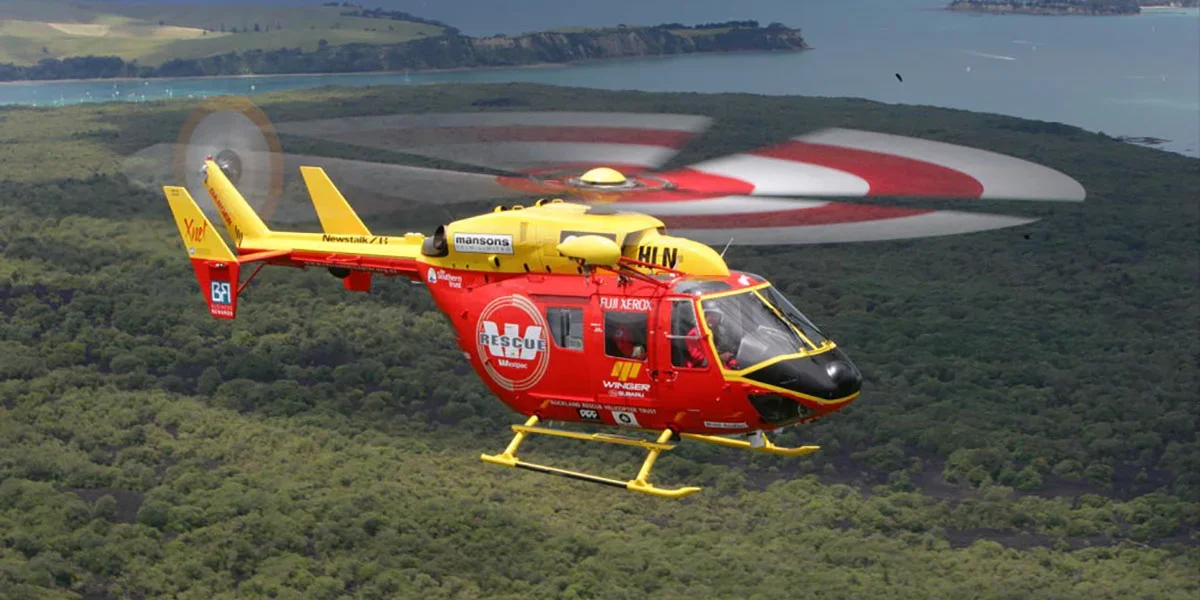
Rescue Helicopter / TR Group
The tragic misunderstanding delayed the girl's rescue by nearly two hours. A Fire and Emergency New Zealand lines rescue team driven from Hamilton by road took 1 hour 40 minutes to reach the scene, when a helicopter deployment would have reduced travel time to less than 45 minutes.
The girl had arrived at Hahei Beach with her family earlier that day and went exploring with the boy around 7pm. When she became worried about her ability to climb back down from the rocks, they continued toward the top. As she looked down, the boy fell past her from a significant height. She remained on the cliff face shouting for help, prompting a bystander to alert emergency services.
Hahei volunteer firefighters, a St John ambulance, and a helicopter with winch capability from Ardmore arrived at the scene. However, when Fire and Emergency requested police authorization to deploy the air ambulance helicopter to transport its specialized lines rescue team from Hamilton, police declined the request at 9:50pm. Call logs documented the reason as cost concerns, with one firefighter noting that police would only approve helicopter deployment if Fire and Emergency agreed to pay the bill.
Police this week issued an apology after an investigation revealed the error. Acting Waikato police district commander acting Superintendent Will Loughrin stated that police had incorrectly concluded the teenager was dead and therefore determined road transport was appropriate rather than helicopter deployment. He acknowledged that if police had asked necessary clarifying questions, they would have categorized the situation differently and likely dispatched police Search and Rescue staff to help coordinate the rescue.
Loughrin indicated that police received initial notification at 8:11pm about a child falling onto rocks, but the critical information gap meant appropriate priority was not assigned to the rescue operation. Waikato police have since been reminded of correct procedures around authorizing such resources and the importance of gathering adequate information before making deployment decisions.
The communications that night revealed deep frustration among emergency responders. A Fire and Emergency communications shift manager emailed shortly after the rescue, describing the situation as deeply distressing. The manager expressed particular concern that responders had been unable to deploy a helicopter to assist a 13-year-old girl stranded on a cliff in darkness after witnessing a tragic death. Internal emails referenced recurring problems getting air ambulance helicopters authorized for transporting lines rescue teams.
The lines rescue team left Hamilton in a utility vehicle just before 9pm. At 9:13pm, Fire and Emergency formally asked police Search and Rescue to approve a Westpac helicopter to transport the specialized crew to the incident. They confirmed the helicopter was available and could pick up the team roadside. Police declined 37 minutes later.
The four-person rescue team continued driving, reaching Hahei at 10:31pm. They navigated through dark bush terrain above the cliff face, taking extreme care to avoid dislodging rocks that could endanger the girl below. They descended approximately 100 meters on ropes to reach her, completing the rescue by midnight.
Fire and Emergency head of specialist response Aaron Waterreus raised concerns with national management about what he characterized as a further instance of delayed rescue response due to police declining air ambulance authorization. He questioned whether Fire and Emergency and police could reach agreement allowing Fire and Emergency to pay for air ambulance deployment so cost would not result in declined requests during emergency operations.
Acting Hamilton group manager Matt Leonard emailed his superiors expressing frustration about the situation. He noted he had raised concerns many months earlier that were validated by the Hahei incident. He emphasized that the girl remained stranded on the cliff for many hours after witnessing her friend's death, and it took over two hours after the fall before successful rescue by the lines team traveling by vehicle.
Leonard referenced communication from an experienced lines rescuer on holiday at Hahei who helped with the response. The rescuer stated that if the situation was not a clear case for helicopter assistance, he could not imagine what would be. Leonard stressed the emotional toll on rescue teams and emphasized the need for institutional review so that life-saving operations would not be delayed or declined by other organizations due to cost considerations.